Before
I had read about you. Watched documentaries that followed your trail through ridgelines and riverbeds, across snow and scree. I had studied the way your body blends into stone. How your silence is not absence, but skill.
I knew your solitude. The stories people told in half-truths and reverence.
But I had never seen you.
You were not just rare — you were untouchable. You moved through the world like mountain fog. Not in a rush. Not in fear. Simply beyond reach.
And in that distance, something in me softened. Not into urgency, but into quiet pull.
You weren't a sighting I craved. You were a presence I had begun to carry.
And something about that made me want to follow the trail — even if I didn't know it yet.
Kibber
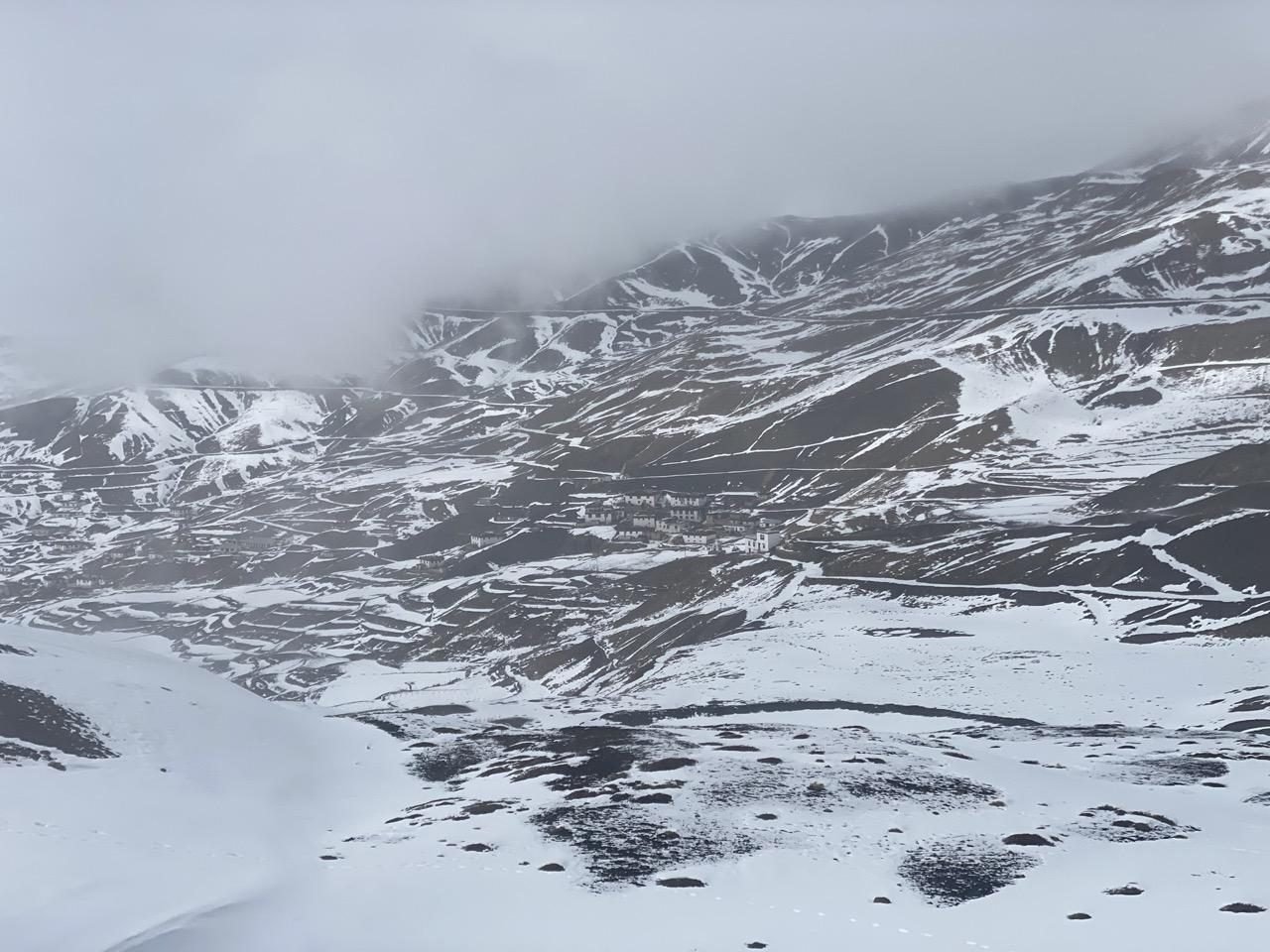
It was on my first trip to Spiti that I found myself in Kibber. I hadn't planned it — most people stayed in Kaza — but a gentle turn in the journey brought me here.
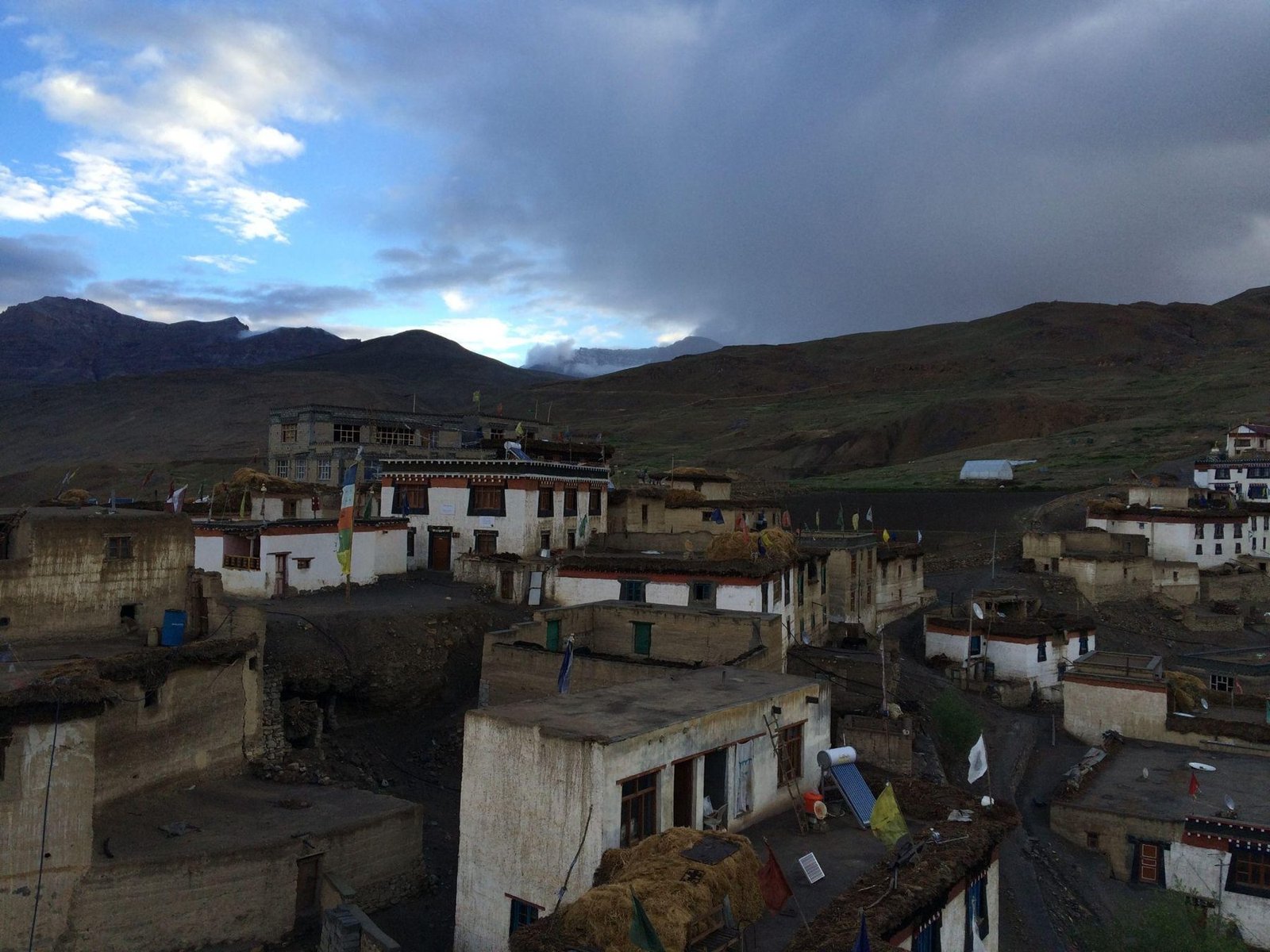
Kibber felt different. A village so quiet, even the wind feels like it walks barefoot. A place where people don't speak of you casually. They lower their voices, as if you might be listening.
They don't call you snow leopard.
They call you Shen.
That's where I first heard your name the way it was meant to be said.
Not "snow leopard."
Shen.
They spoke your name with care. Not casually. Not loudly. As if it wasn't just a name, but something alive. A breath. A presence. Almost a prayer. Almost a warning.
Shen. Not snow leopard. But a spirit that moved through these mountains — unseen, but never absent.
And maybe that was the moment I understood: I hadn't come looking for you. But something in me had been following your shadow all along.
In that single, whispered name, I heard something ancient. Not scared — but sacred. Something wild. Something waiting. Something I didn't yet understand, but felt called to follow.
The Night
And then one of the drivers said he knew a spot — a place, he claimed, where one could sometimes catch a glimpse of you. He told us stories in that half-certain voice people use when they want to be believed. Tales of quiet campsites where you'd crept in for food, your eyes glinting just beyond the firelight.
I believed him, at first. We all did. Looking back now, I know it wasn't true — but maybe it didn't matter.
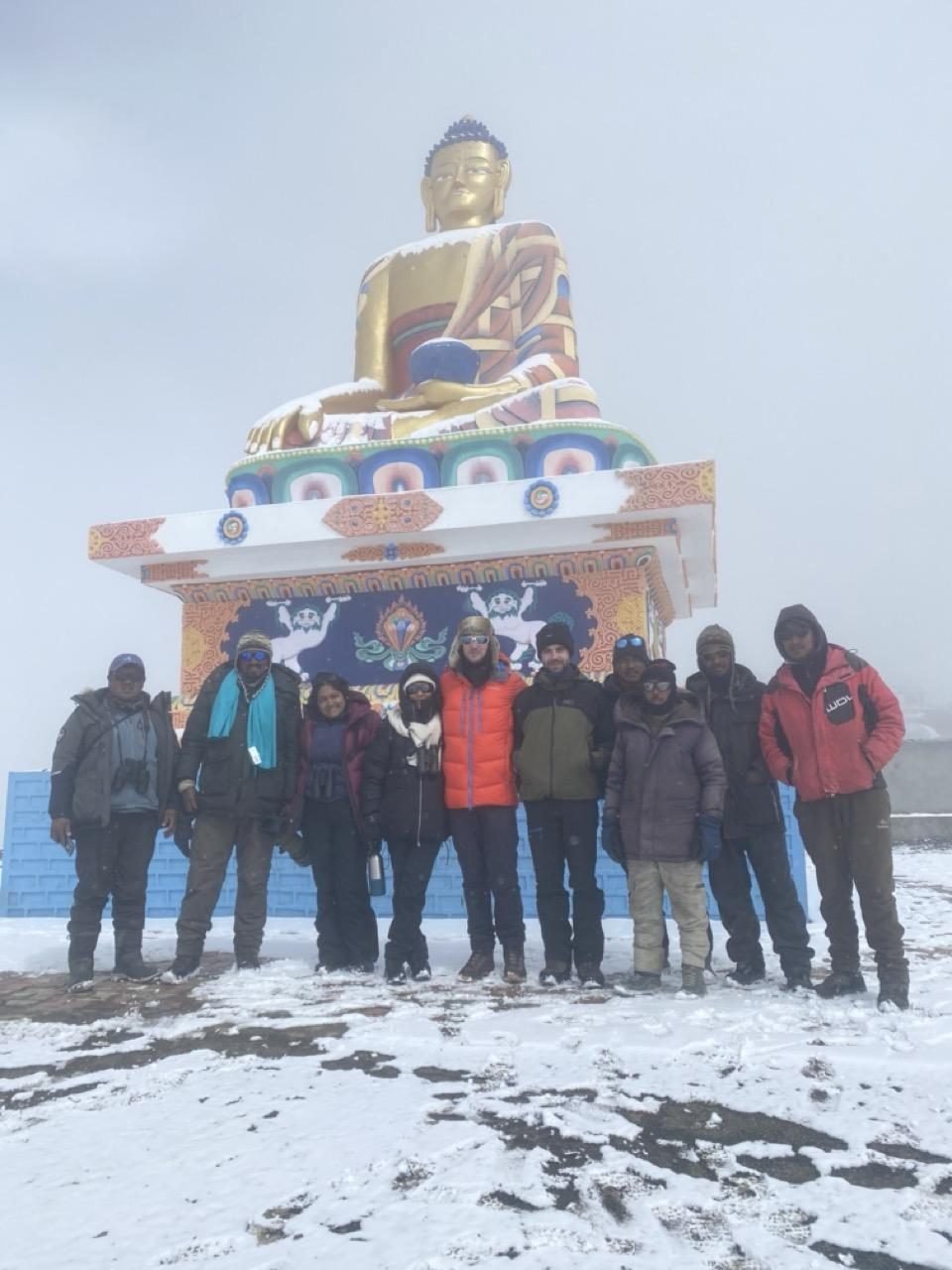
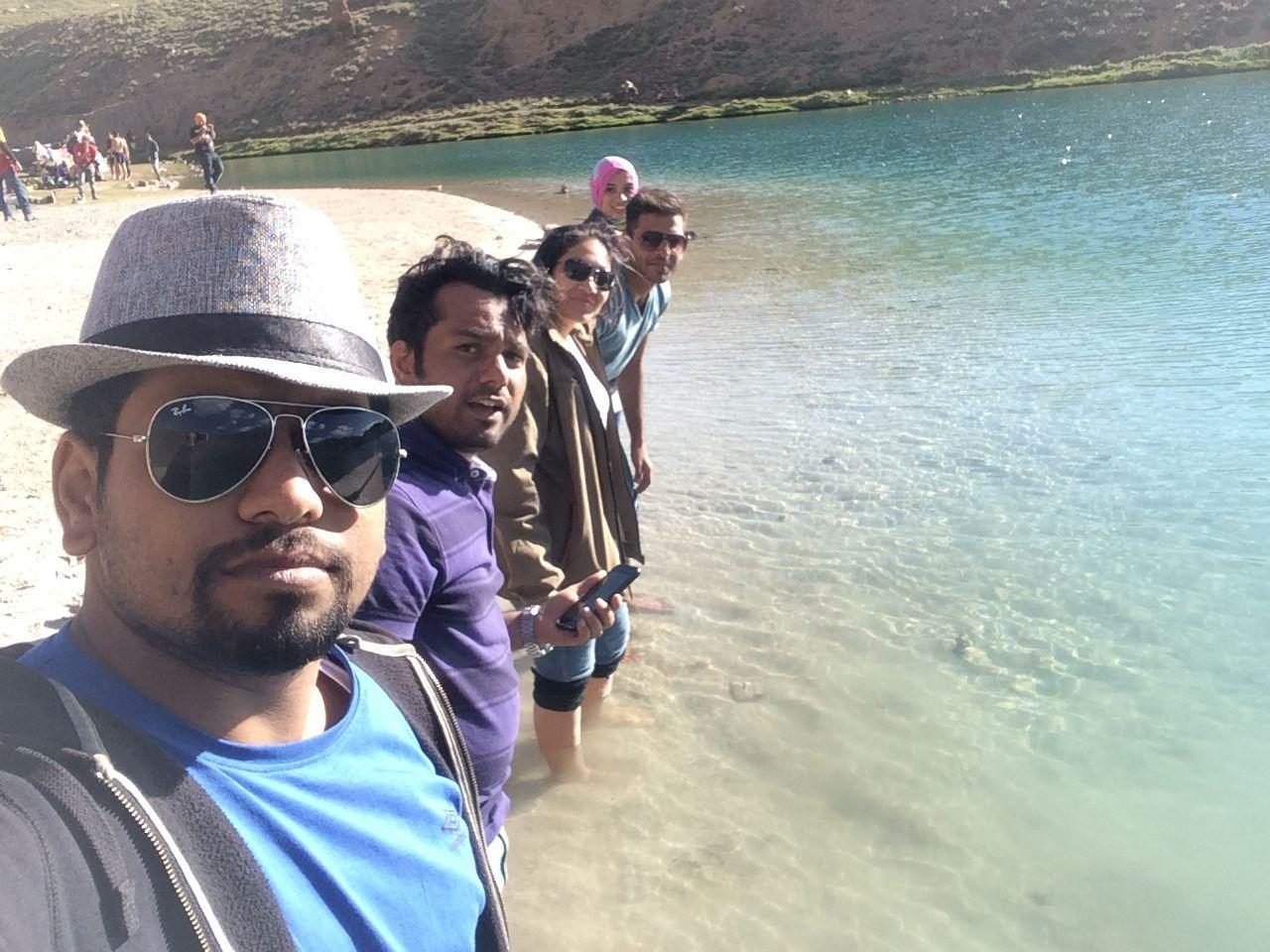
A group began to form around the story. Strangers at first, pulled together by the promise of the impossible. It's been a decade since that night, and we are still in each other's lives. That's what you did, without ever appearing.
We agreed to leave quietly — just one vehicle, a gentle detour into the dark. But plans in the mountains rarely stay simple. Another driver and a tour lead joined us. So now we were two Innovas, headlights cutting through blackness, engines growling against thin air as we climbed out of Kibber.
I think we may have been heading toward Gete, but we couldn't see anything beyond the four feet of road illuminated ahead. Everything else — the direction, the incline, the distance — had vanished into the night.
You didn't come.
But the night gave us something else.
Plastic cups filled with local aarak, passed between cold fingers. A little grass. The kind of music that feels louder when there's nothing around you but silence. We danced under our own headlights, two cars in the middle of nowhere, anchored only by rhythm and recklessness.
Eventually, one vehicle turned back. But ours lingered, not ready to return. We danced longer, laughed harder.
And then came the descent.
The girls, with strategic precision, claimed all the window seats. The boys, with misplaced confidence, climbed onto the roof. What followed was less a drive and more a descent into madness. Our driver — the one we affectionately called Doremon — seemed to come alive with mischief. He took the turns at alarming speed, and we couldn't see the faces above, only the legs swinging wildly as they screamed into the cold. He didn't stop. He didn't slow down. We laughed until our sides hurt and our nerves frayed.
Thirty minutes later, the first vehicle returned — thinking they had missed the fun. By then, we were ready to end it. Or so we thought.
On the way back, Doremon flashed his headlights at the other vehicle and slowed to a stop. We were confused at first, unsure what had happened. And then, without a word, he stepped out of the car, turned the music up — Baby Doll Mein Sone Di, no less — and began dancing in the beams between the two vehicles. Loose-limbed. Unbothered. Utterly free.
It didn't take long for us to join him.
That should have been the end.
But just as we neared Kibber, the other Innova took a wrong turn around the stupa. In the mountains, you always circle a stupa from the right — a gesture of respect. That night, we forgot.
And just like that, the car got stuck. Lodged between the stupa and the edge of the valley wall, tyres spinning helplessly. We tried placing stones under them, but they cracked like eggshells. The homestay lights were in sight, but we couldn't move.
One of our youngest panicked. He said he needed to wake his parents, confess where we'd gone. We took turns calming him down, trying to come up with a solution. But the high had faded. Cold crept back in. We were tired. And the silence was heavier now.
And then — salvation in steel. A tempo full of workers returning from the day's labour slowed beside us. They didn't ask questions. They just stepped out and helped lift the Innova, shifting it enough to steer it free. The kind of help that only happens in the mountains — swift, strong, and wordless.
We reached home not long after. Shivering, quiet, and still grinning at the absurdity of it all.
But you weren't there.
A few days later, the trip came to an end. There had been no sightings of you. Not a paw print. Not a whisper. Not even a false alarm.
Somewhere on the way back, one of the Innovas broke down again. We were stranded once more — this time in the sunlight, not the starlight. The road was empty. We sat on rocks by the side, waiting for help or time or something else to shift. No one complained. There was nothing to do but wait.
That's when Doremon, with his usual shrug and half-smile, looked up from the open hood and said, "Cheej banegi… tame lagega."
We laughed, again. At him. At ourselves. At how these hills always seemed to slow us down just when we thought we were moving forward.
At the time, it was just a line. Later, it would become a prophecy.
The Return
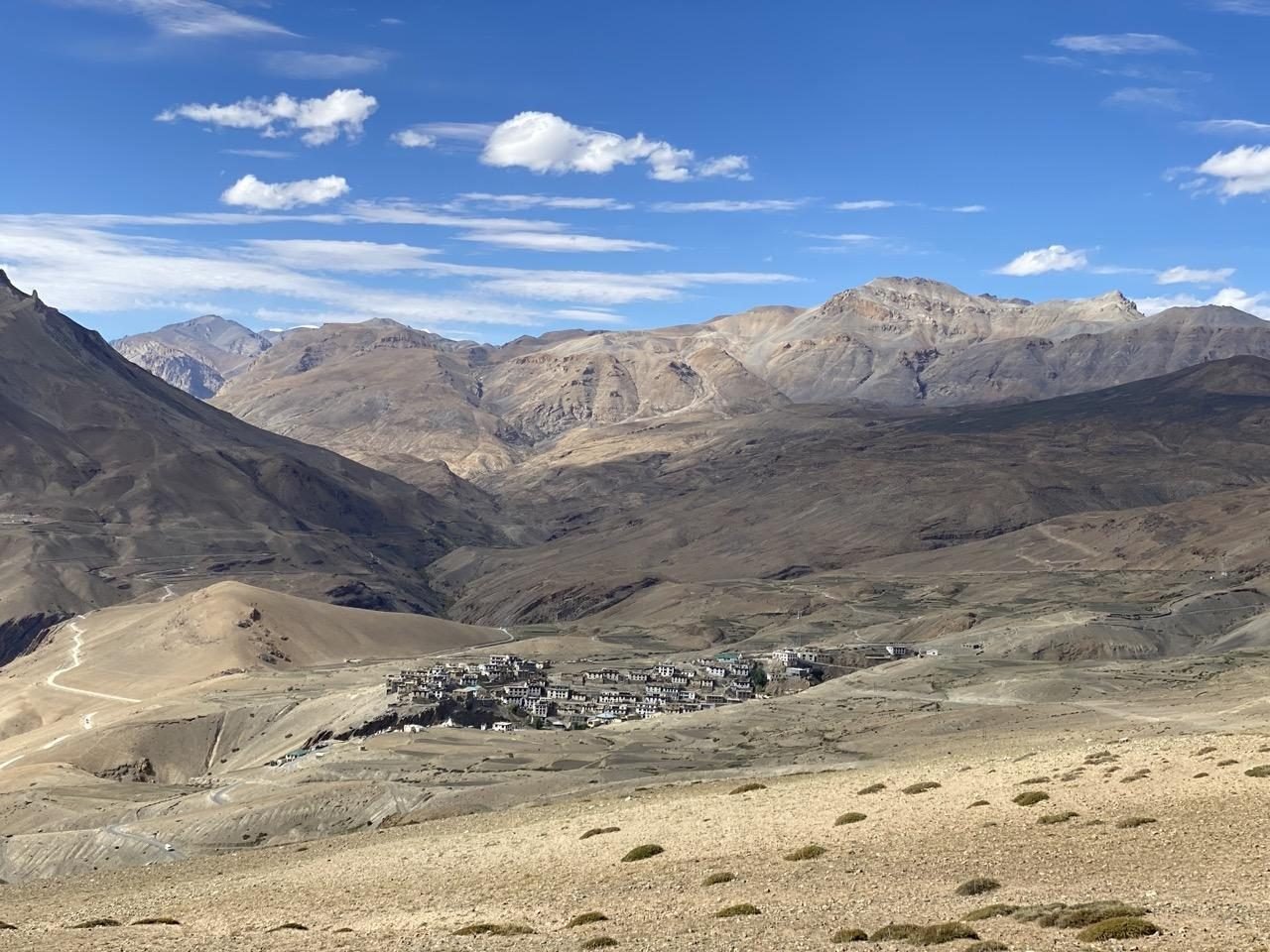
Six years had passed. And once again, it was summer. I found myself returning to Kibber — not as a traveller passing through, but as someone whose life had quietly realigned itself around the very longing that had begun here.
Because somewhere in those years between that first night and now, I had changed everything. What started as a silent fascination with you had grown into a calling.
I left behind the life I had built. I changed my work, my rhythms, my sense of time. I stepped into a world shaped by wildness — of movement, of instinct, of reverence. Now, I lead others into the wild. Across savannahs and forests, across deserts, across valleys and cloud forests, leading them into encounters with the untamed. I became a guide, a storyteller, a seeker. Not because I had seen you — but because I hadn't. You became the echo that led me deeper.
Fate didn't just bring me back to Kibber. It rewrote my path entirely so I could return with purpose.
I had just completed a long, luminous stay in Ladakh — a season of silence and slow unfolding. One of those days brought me face to face with the elusive Pallas's Cat. Strange, square-faced, almost mythic — it emerged like a secret kept just for me, lingered, then vanished. That moment cracked something open again. Through that crack, the mountains called. And through them, Kibber.
This time, I didn't come with a plan. No permits. No camera traps. No expectations. I simply came to stay. For a few days. Maybe more. Before heading to Kinnaur. Before returning to what people still called "real life." But I already knew — this was my only real life now.
The journey was everything the mountains promise: staggering views that made your chest ache, roads that swung like threads across ravines, glaciers melting into silver ribbons. The wind grew cooler as I climbed, and with it came something else — not quite memory, not quite hope. A sense of something waiting.
Kibber welcomed me like a long-lost friend who remembered everything but asked nothing. It was the same village — prayer flags fluttering above flat rooftops, old women spinning yak wool outside sun-warmed walls, and the ever-present hush of altitude — but I was different now. And so the village revealed new layers.
My days were filled in the way only high-altitude days can be — with activity that didn't rush, joy that didn't shout. I trekked through soft scree and across narrow trails where even the air moved carefully. I birdwatched with my binoculars, my pulse quickening at every rustle. I collected fossils like secrets, brushing away dust that had sat quietly for thousands of years.
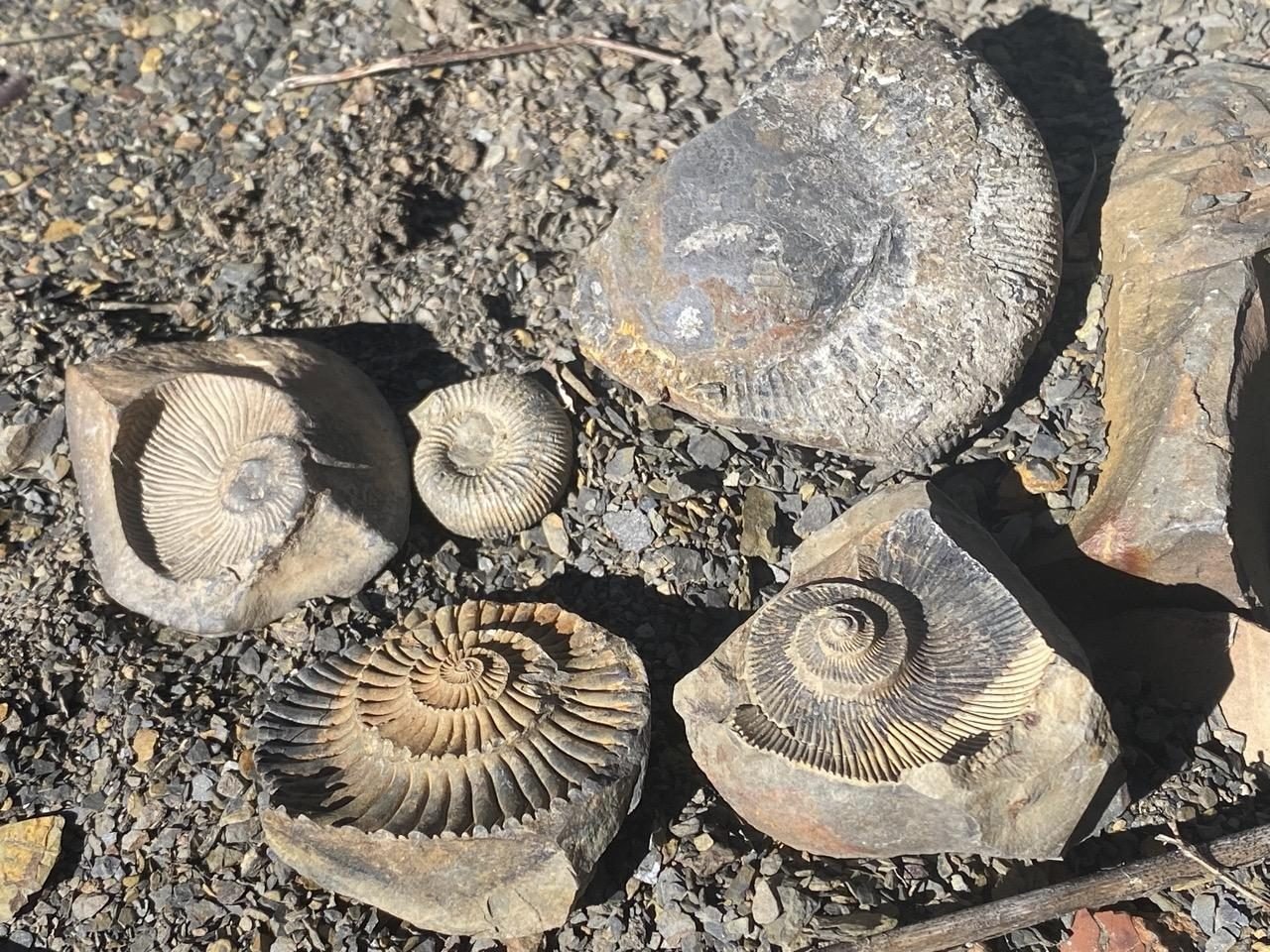
I learned how to drive on roads that were less road and more intention — carved from cliffside, kissed by gravity, and bordered by nothing. There were times I drove just to see if the road would hold me. It always did.
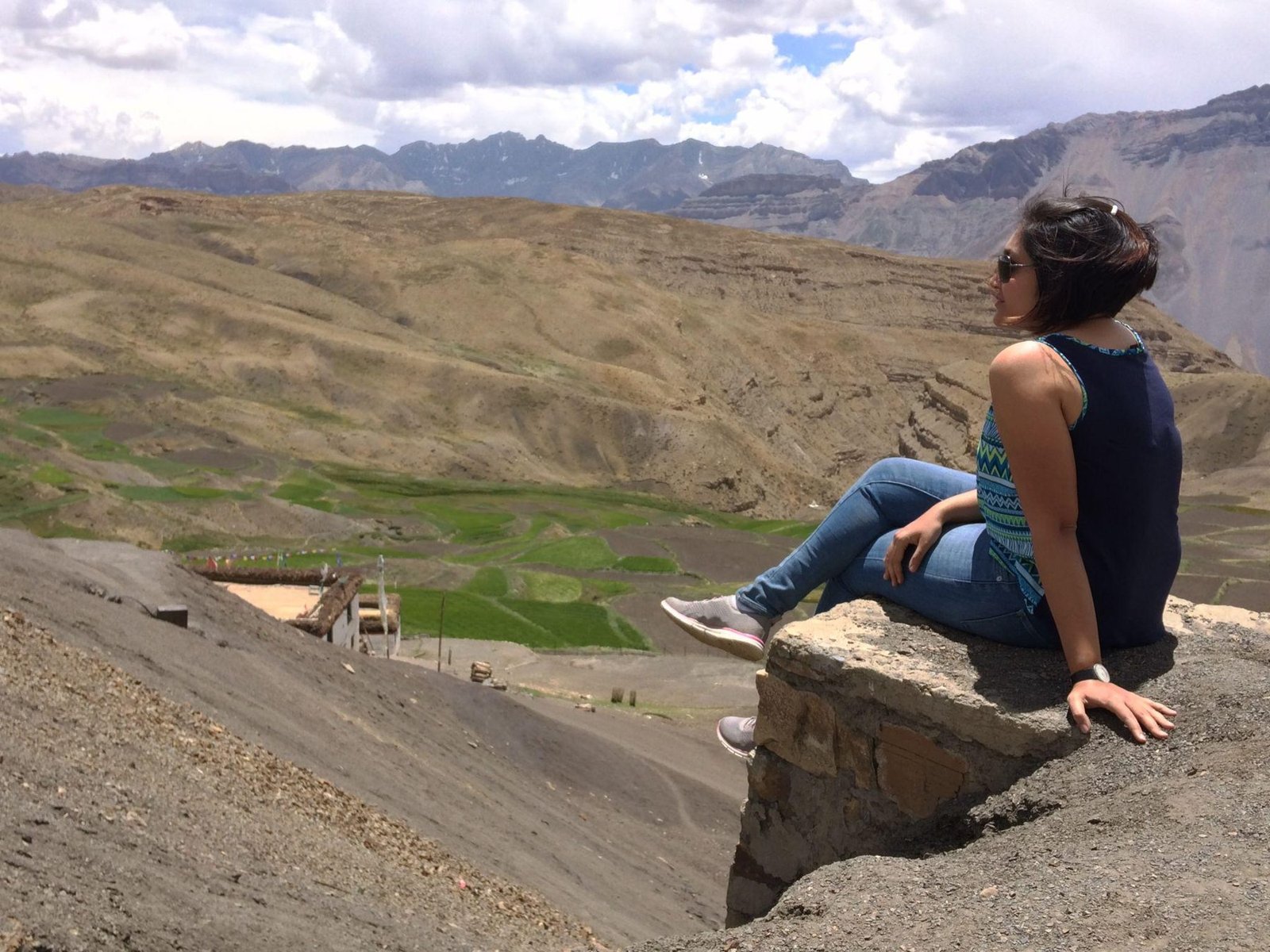
Afternoons often ended with a beedi between my fingers, toes curled over the edge of a cliff, sky pouring itself into the gorge below. The horizon felt infinite here — not in width, but in depth. As though the whole earth had folded into this bowl of stone and cloud just to witness who I had become.
There was laughter too. We joked about how many donkeys or yaks I'd be bestowed with if I stayed. What it would be like to stay here forever. Some jokes land too close to truth to be dismissed.
Evenings belonged to the women — Bhabhi, in her warm smoky kitchen teaching me how to make the perfect momos. Maa, who offered me fruits and handwoven headbands with a kind of tenderness that no city love could match. Their homes smelled of woodsmoke and cumin, of boiled apricots and old stories.
And at night, we returned to the sky. It never disappointed. The Milky Way poured itself across the heavens like someone had torn the fabric of space. Stars hung so low you felt you could brush them away like ash. We sat wrapped in wool, drinking in the cosmos — meteor showers carving silver arcs into the dark, satellites pretending to be stars, and the kind of stillness that only the mountains can offer without asking for anything back.
And whenever a star fell, I would wish. I never said it aloud. But it was always the same.
Come.
Please.
Come, Shen.
Eleven Hours
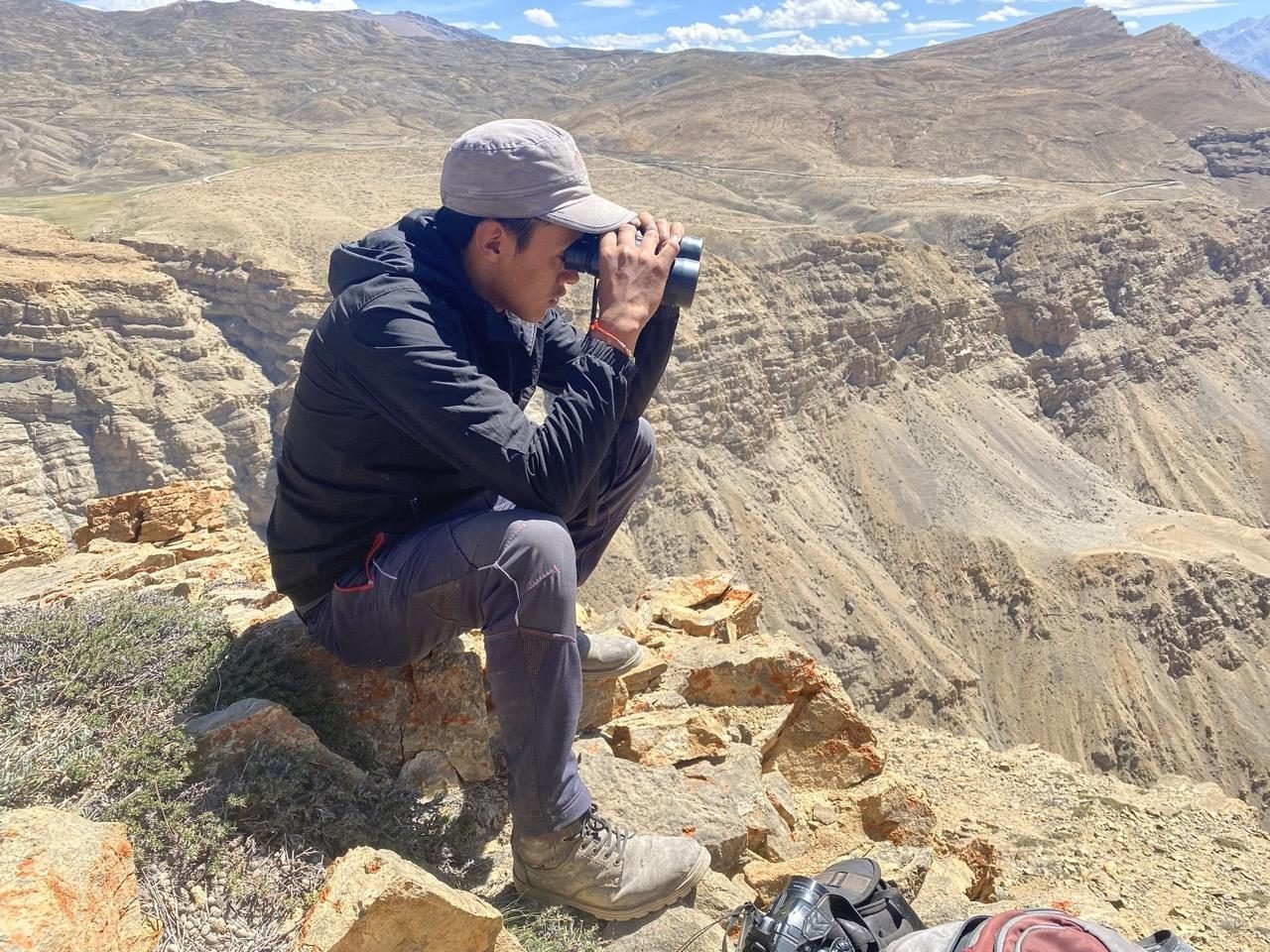
One morning, while birding near the cliffs carved by the Spiti River, I spotted a European Goldfinch — a female. I was scanning the gorge for her mate, that brilliant slash of red and gold, when Tashi — my quiet, steady companion in Kibber — pointed across the canyon.
He said just one word: "Look."
It took me a while to see what he saw.
At first, it looked like an artifact — some unusual form buried in shadow, tucked deep inside the cave across the gorge. The kind of shape that tricks the eye. But as I raised my binoculars, and the image sharpened, the truth became clear.
It was your tail. Long. Fluffy. Impossibly still. Draped at the edge of shadow, like the punctuation to a sentence I hadn't yet heard.
That was it — just a tail. And yet, oh, the feeling.
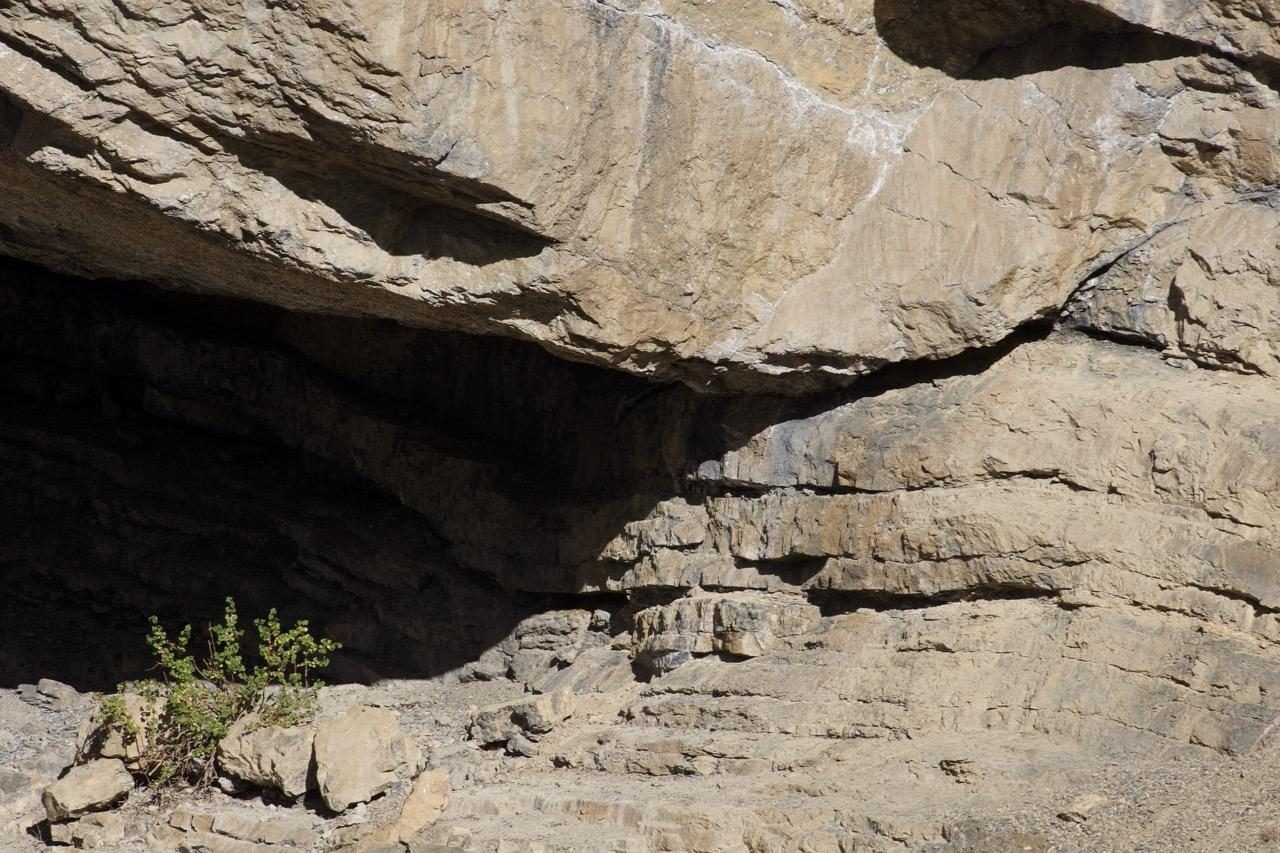
My heart was pounding so loudly I could barely breathe. I had dreamed of you for so long that even this felt like too much — as if the mountain was offering just the edge of a secret, to see if I'd handle it with care.
We decided to trek closer. The rocks were loose and the path barely there. My boots slipped often, but I didn't care. I needed to be nearer. To witness more than a whisper.
I found a small nook in the rocks just wide enough to fold myself into — legs bent, back against stone, binoculars clutched, camera within reach.
It was 6:30 AM when we first saw your tail — just the tail — draped out of the cave across the gorge like a careless secret. Tashi was with me when we first spotted it. But unlike me, he could step away — to fetch water, to smoke, to chat with someone nearby. I stayed. Anchored to the moment. I knew I couldn't move.
Every muscle in my body screamed for release. I needed to pee. My throat was dry from the wind, and the bottle of water Tashi left by my side remained untouched. I didn't dare lift it. Every small need was trumped by the larger need — to witness you whole.
The weather, as if conspiring with you, began to turn. By midday, rain crept in, chilling my spine. I hunched deeper into my nook, soaked and shaking. And then, as if that wasn't enough, it began to snow. In the middle of a Spiti summer. Soft, surreal flakes landing on my jacket, on my eyelashes, brushing my cheeks like questions.
I hadn't dressed for snow. I hadn't prepared for any of this. My fingers lost feeling. My knees stiffened. The rock beneath me grew sharper with each passing hour.
Still, I didn't move.
The hours stopped feeling like hours. The sun arced above but I didn't track its path. The gorge below rumbled faintly with the voice of the river. Birds came and went — choughs calling to one another above my head. I watched their flight when my eyes blurred from staring at the cave too long. Occasionally, I closed my eyes — not to rest, but to remain.
I wasn't testing my strength. I wasn't chasing a photograph. I was waiting for something older than both. Something quieter.
Six years had passed since I had first heard your name — Shen. And every year since had carried your absence. You were a silence I had carried for years. And now, here I was — knees aching, lips chapped, breath held — holding that silence in my lap like an offering.
I had waited six years for you. What were a few more hours?
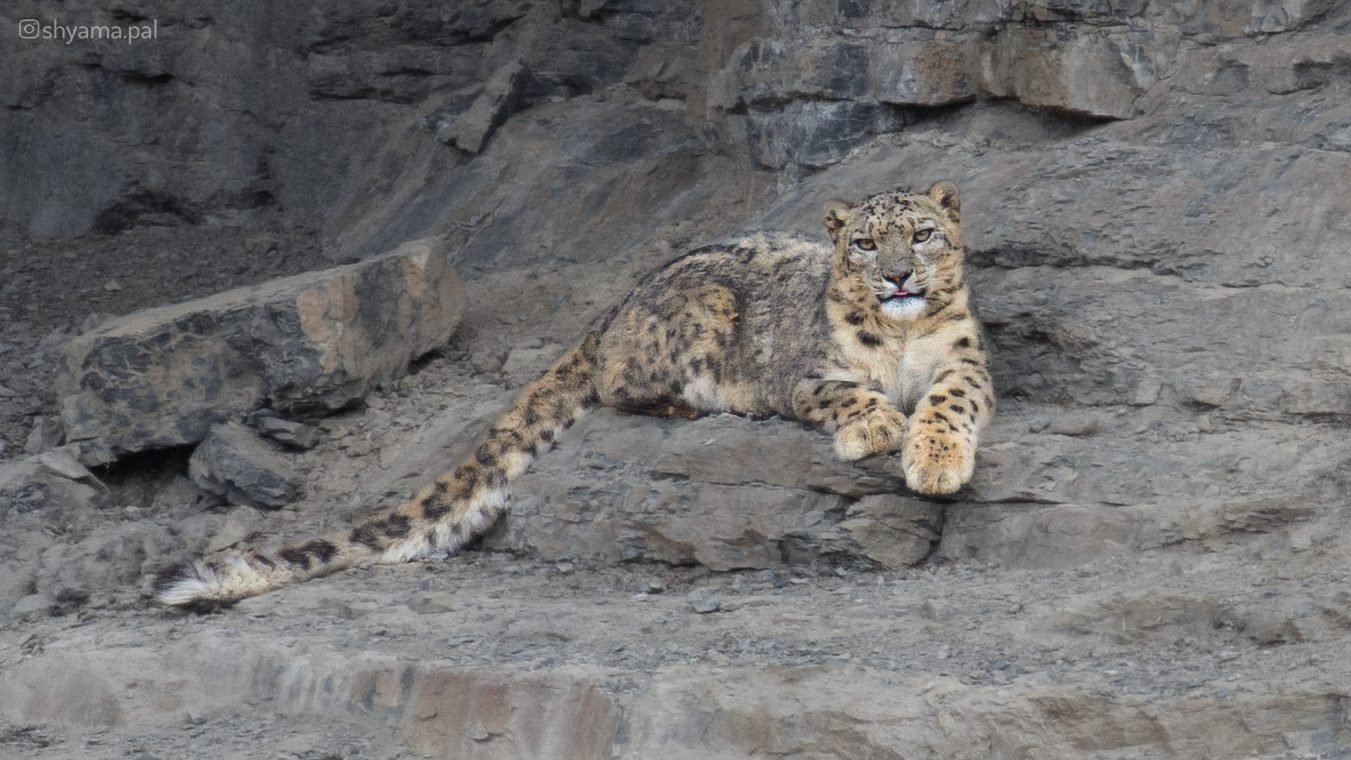
And then, after eleven hours, you stepped out.
From within the cave — a cave within the cave — you emerged. Quiet. Unbothered. Whole.
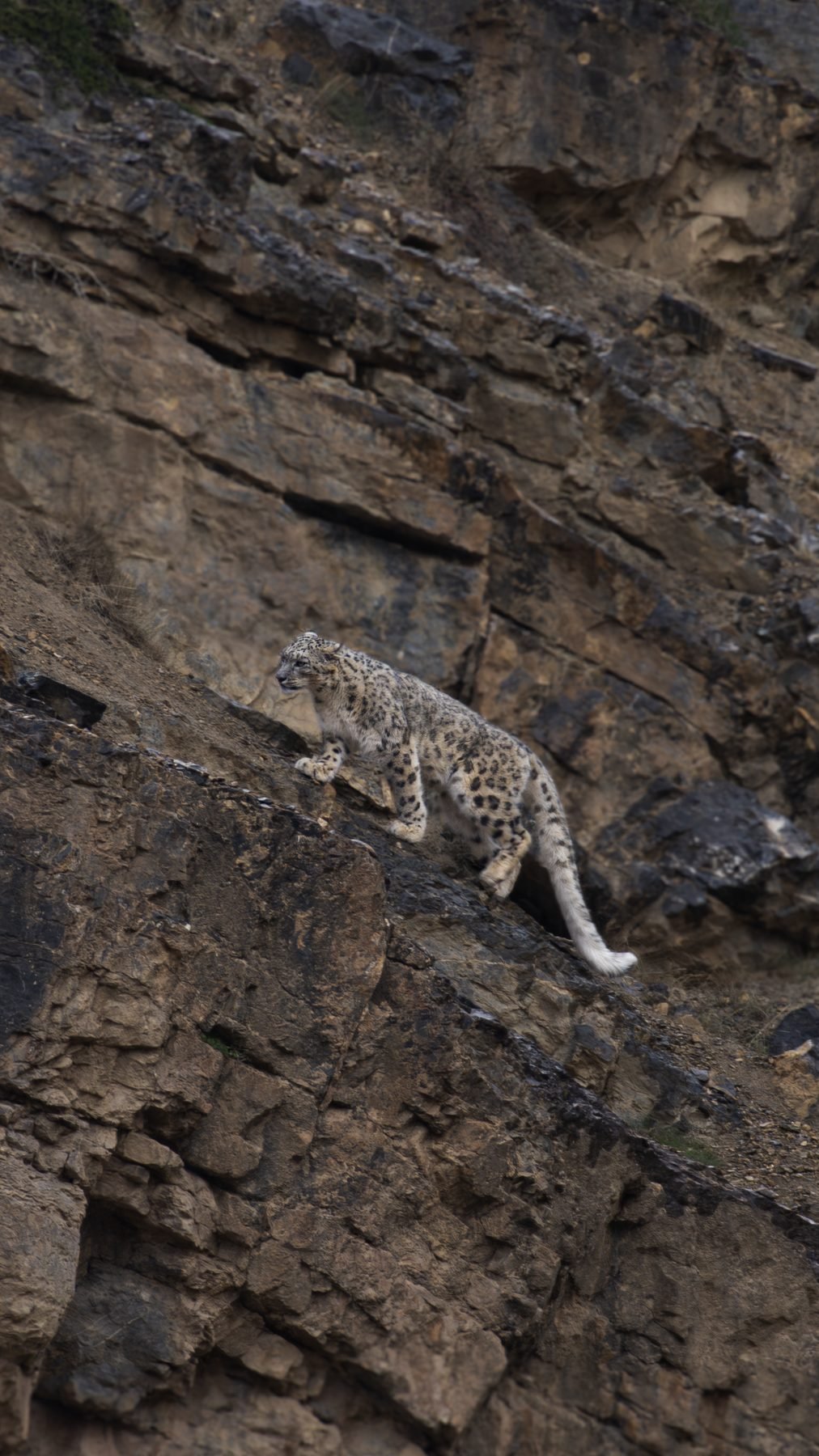
You stretched. Slow. Luxurious. Deliberate. The kind of stretch only wild cats know — the kind that ripples through bone and fur like a hymn — a grace that belongs to another world. Your coat shimmered with mountain dust. Your muscles rolled like water. Your tail curled like mist.
And then, as if sensing exactly where I was, you looked at me. Not through me. At me.
I didn't feel like a human who had found a snow leopard. I felt like a soul that had been seen by one.
It was the kind of look that ends all questions.
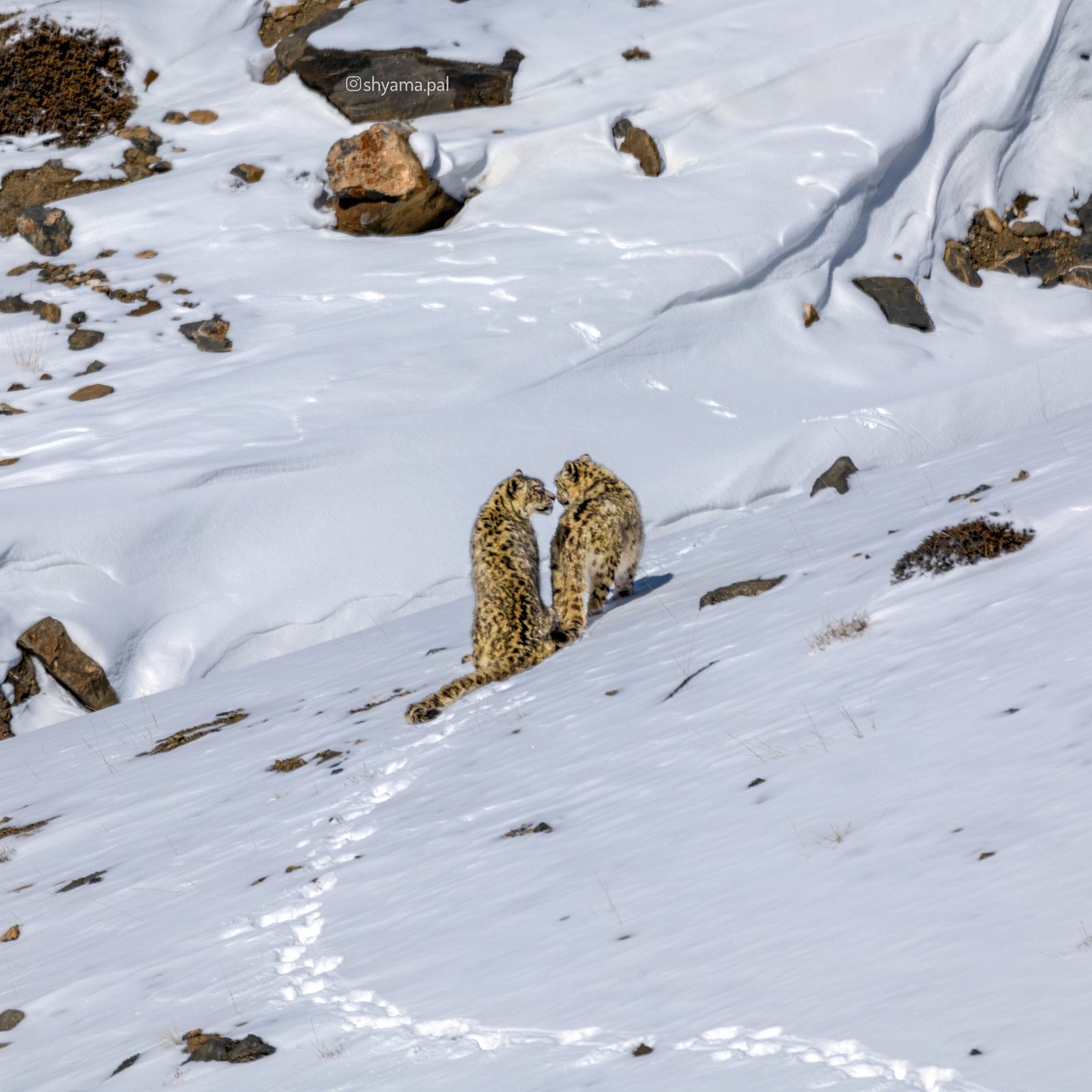
The photo I carry now was taken in that exact instant. But the real image — the one that matters — is burned somewhere deeper. In a place no lens can reach.
After you disappeared back into the stone, I didn't move right away. I couldn't. The air felt different, thicker with meaning, as if the moment itself hadn't passed yet but was still hanging between the cliffs like smoke.
Tashi returned — and when I showed him the photo, he let out a sound that was half a laugh and half a prayer. We didn't speak much. We didn't need to. There are some sightings words cannot hold.
The walk back was slow. Every step away from the gorge felt like stepping out of a dream — one I had lived with open eyes. The wind had settled. The sky had cleared. Even the choughs had gone quiet, as if the mountain itself was giving me space to carry what I had just seen.
When I returned to the village, everything was the same — the children still played in the dust, Bhabhi still stirred lentils in her kitchen, Maa still sat with her spindle near the window — and yet I felt like I was walking through it all for the first time.
People asked if I had seen you. I nodded. They smiled, and nodded back. They understood. Not the sighting, perhaps, but the silence that follows it.
I thought it would end there. That I'd return to the life I had come from — carry the story like a talisman, return to the city, and file the memory into some velvet-lined drawer in my heart.
But the thing is — when the wild sees you, it never lets you go.
That encounter — eleven hours of waiting, six years of longing, one second of being seen — didn't just change me. It changed everything.